A Learning Experience for Career Transitions
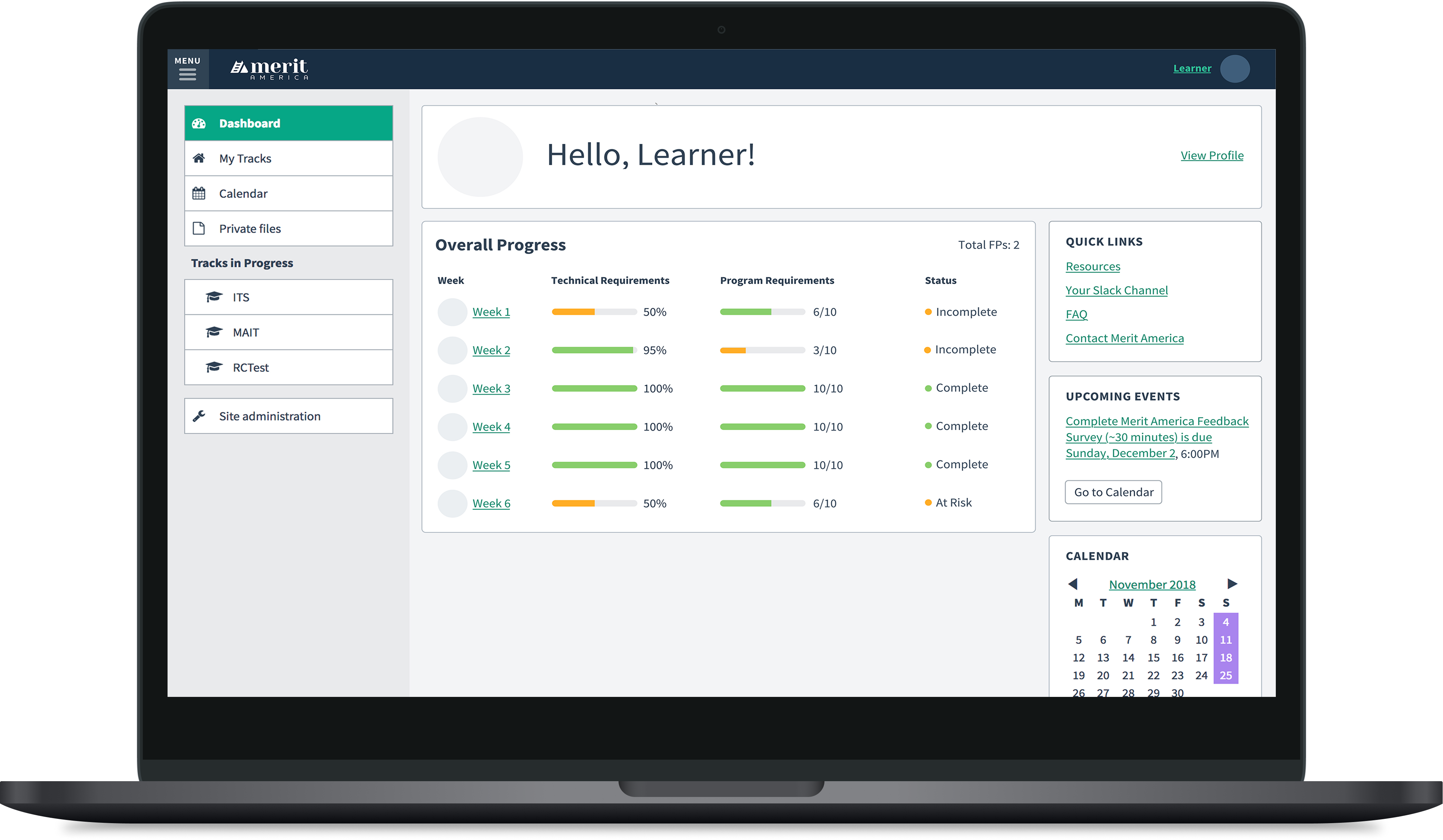
A mobile-first learner portal that replaced spreadsheets and manual tracking with a single, scalable system, helping Merit America grow from a 15-learner pilot to 1,000+ learners across three cities.
Background
Merit America supports working adults to transition into tech careers. Designed for people balancing full-time jobs, families, and studying nights and weekends, the program blends online coursework (Coursera) with hands-on career coaching.
By 2019, growth had outpaced operations. Coaches were buried in spreadsheets and email threads, while learners lacked a clear, centralized view of their progress. Many learners required a mobile-first experience out of necessity. Busy schedules and unreliable Wi-Fi meant every extra click or slow load became a real barrier.
External engineering team, limited budget, and an Alpha cohort launching within weeks. The MVP needed to be lightweight, trustworthy, and built to scale without the runway for a custom build.

- See weekly expectations instantly
- Confirm progress on mobile
- Stay motivated — no shame
- Finish tasks with minimal friction

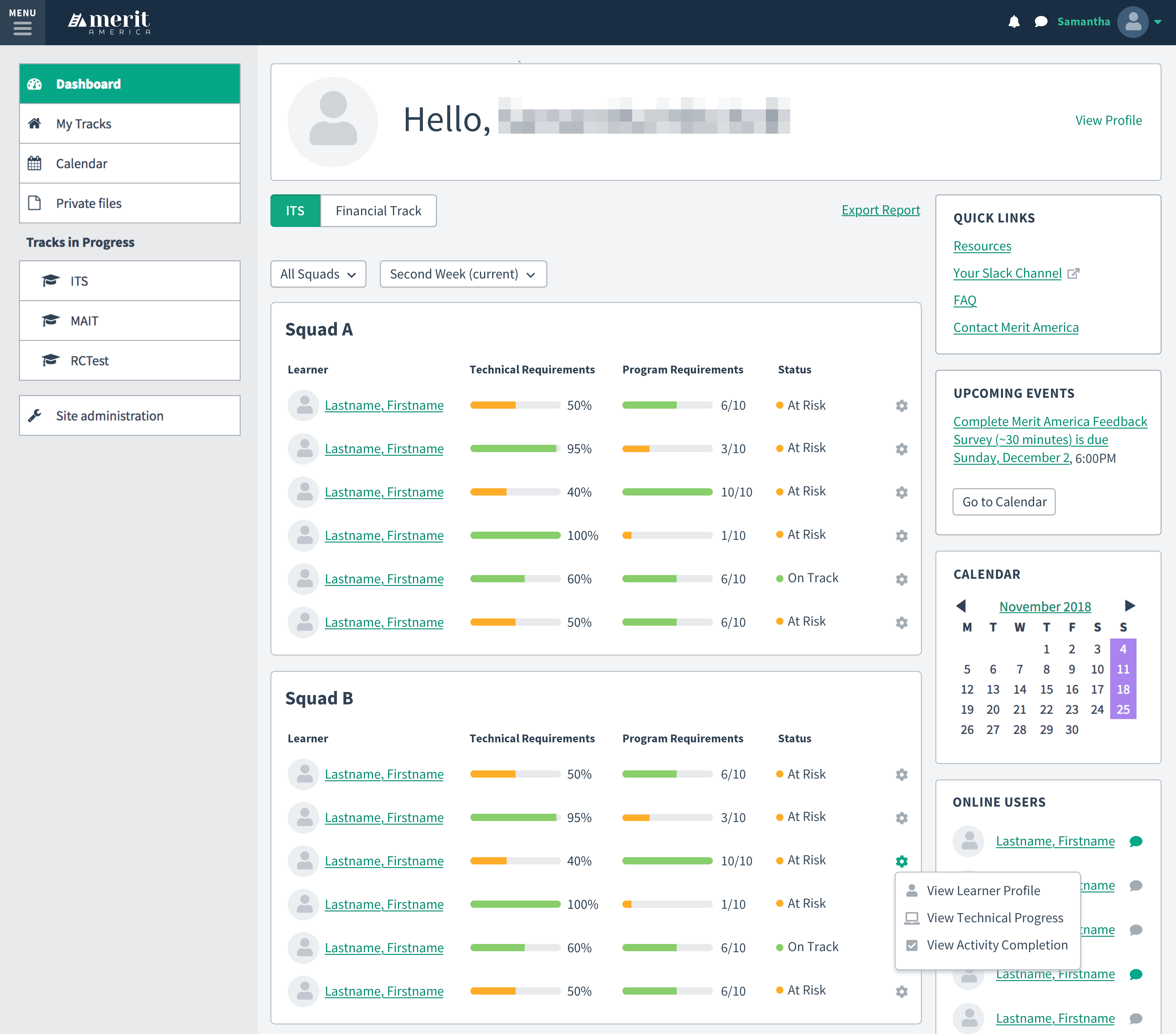
- Scan progress by squad fast
- Spot and support "At Risk" learners
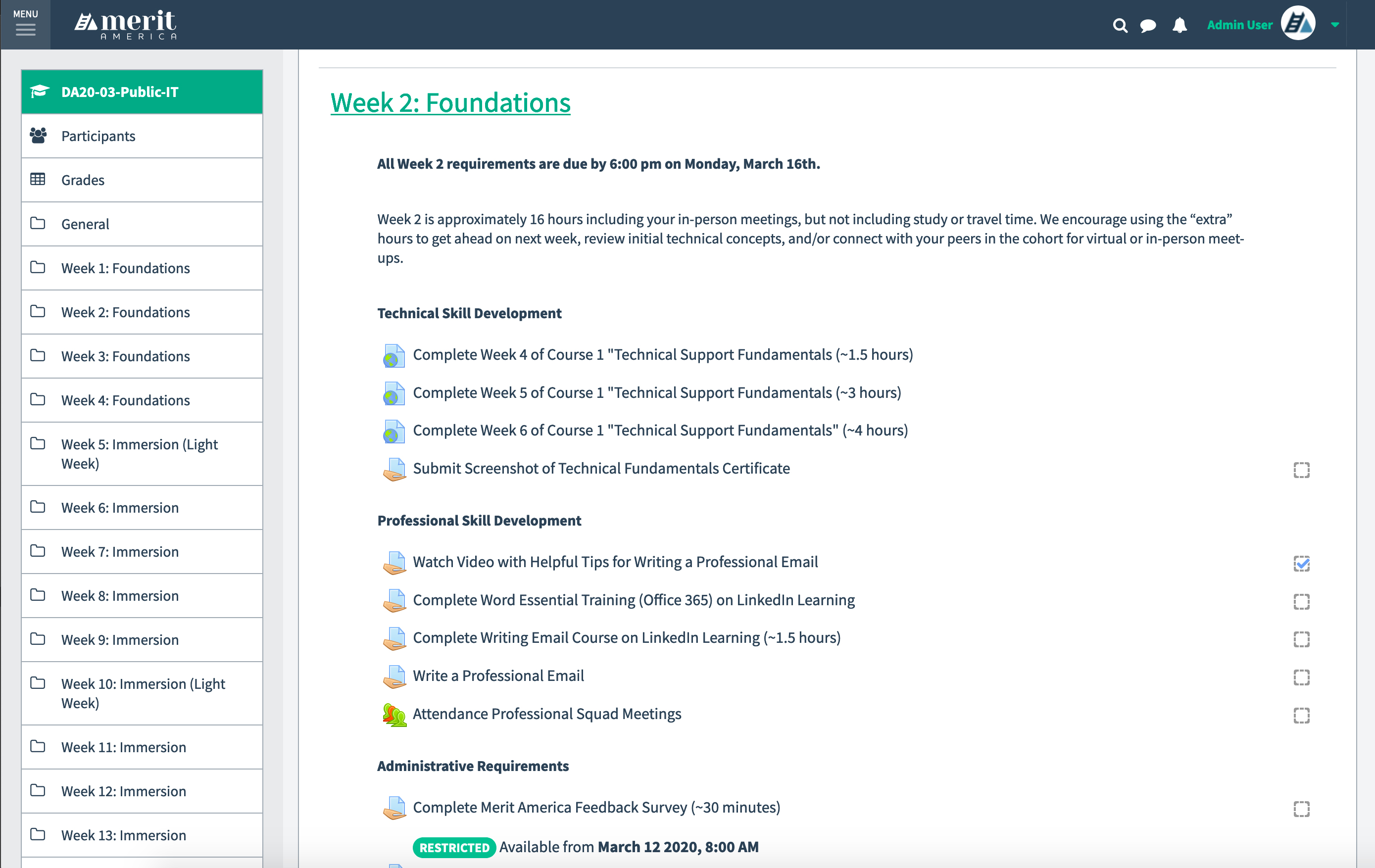
- Verify completion in one place
- Spend more time coaching, less on admin
Problem
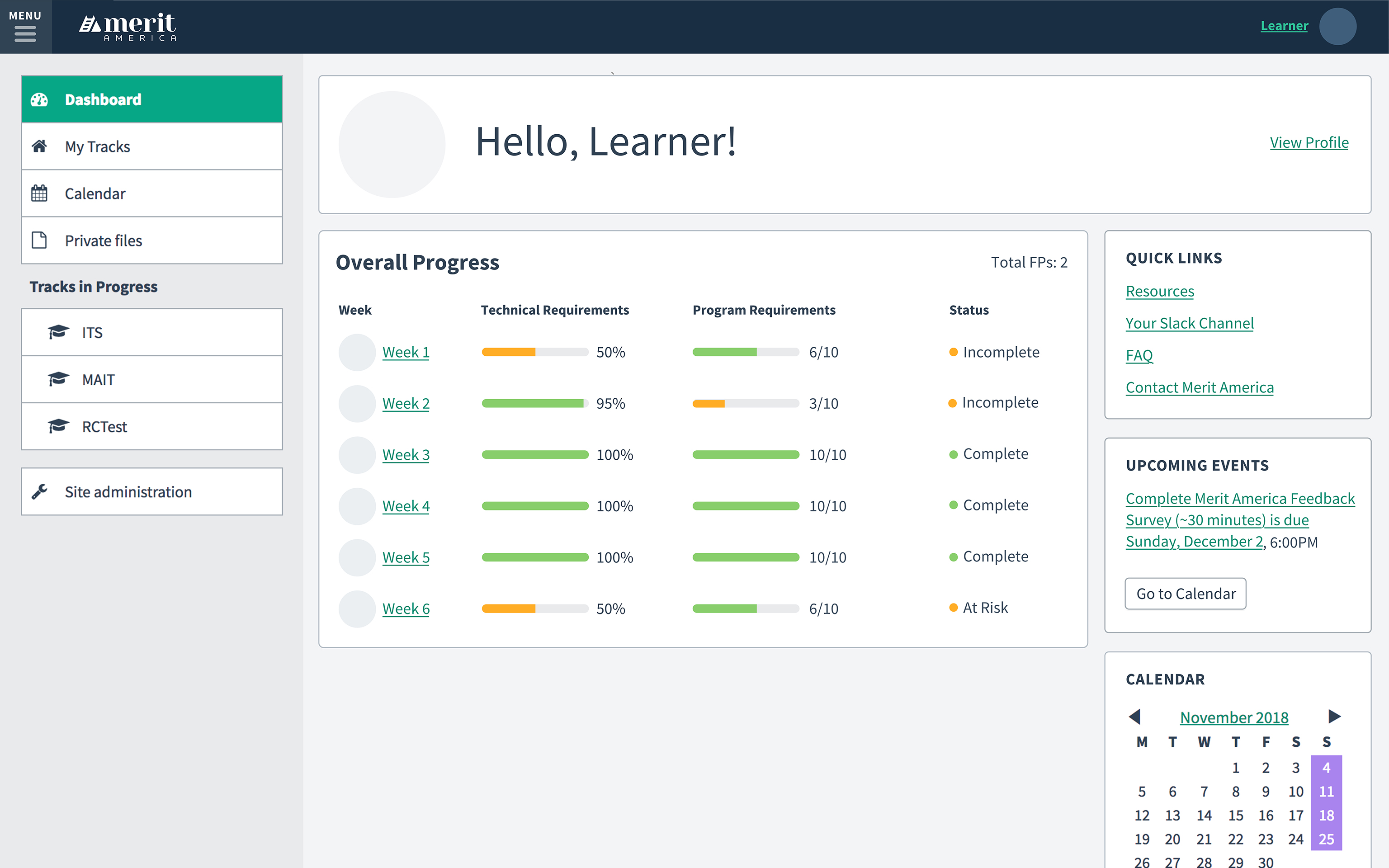
Learner: "Am I on track this week?"
Coach: "Who needs attention right now?"
Everything else was secondary.
The portal replaced a fragmented set of tools (Coursera dashboards, spreadsheets, email threads) with one source of truth. The design challenge became more than consolidation. It was about understanding how real people reasoned about progress when stakes were high and time was scarce.
Process
I embedded discovery directly into early delivery by joining learner interviews, shadowing coach workflows, and validating assumptions in real time during the Alpha cohort. Research was an integrated risk-reduction tool instead of a separate phase to avoid becoming a bottlneck.
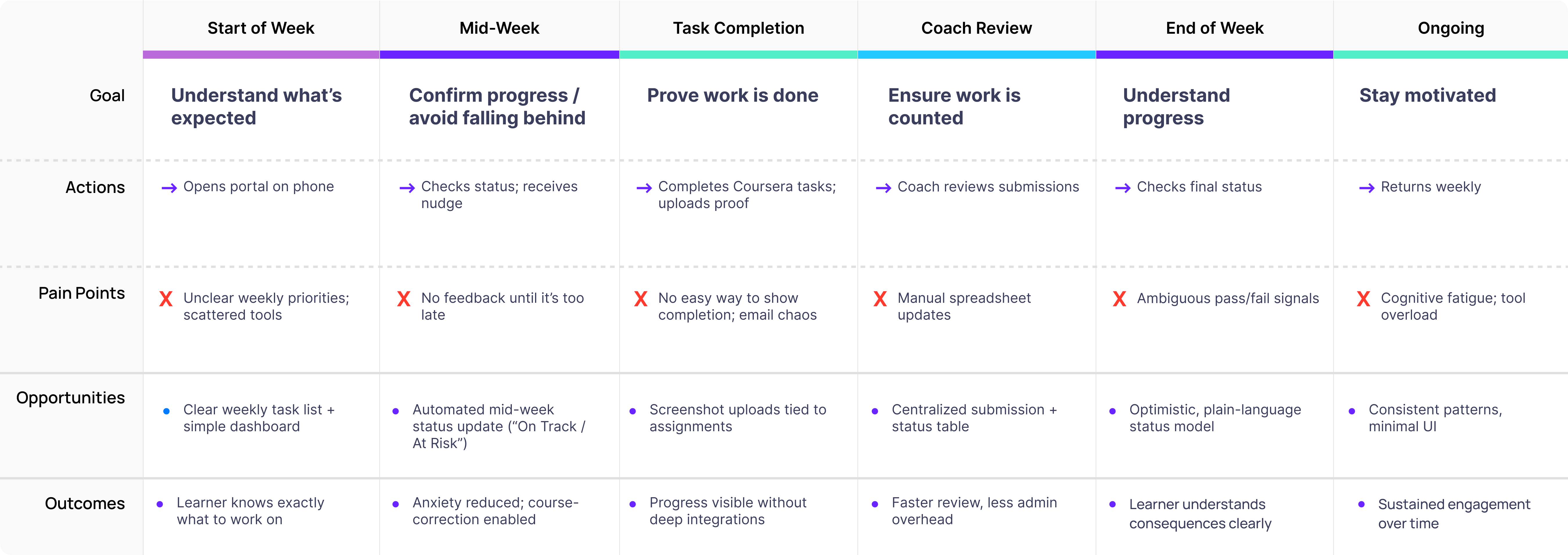
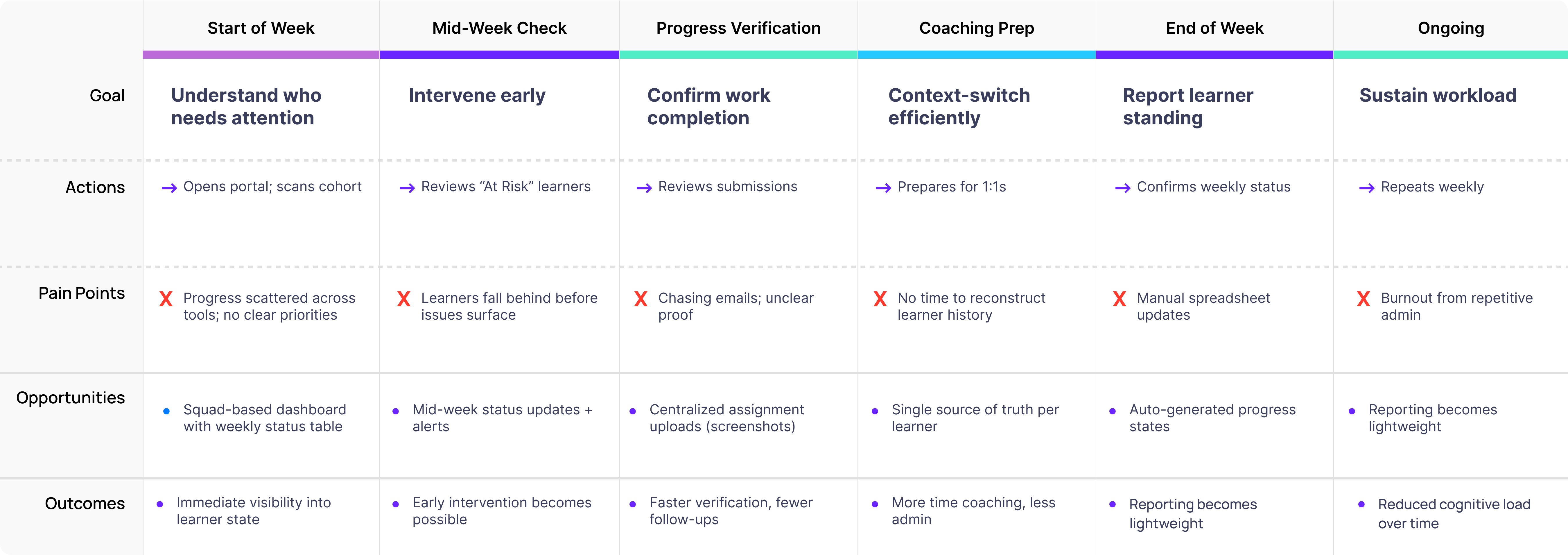
Journey Maps
One-screen journey maps grounded the team in each user's weekly rhythm before any wireframes were drawn.
Build Process
- Learner interviews
- Coach workflow shadowing
- LMS platform evaluation
- Scope anchoring around weekly rhythm
- System state mapping
- Wireframes focused on "what matters now"
- Early usability testing on behavior over polish
- Risk identification with dev team
- Scrappy mitigations alongside Alpha launch
- Simplified progress states based on Alpha feedback
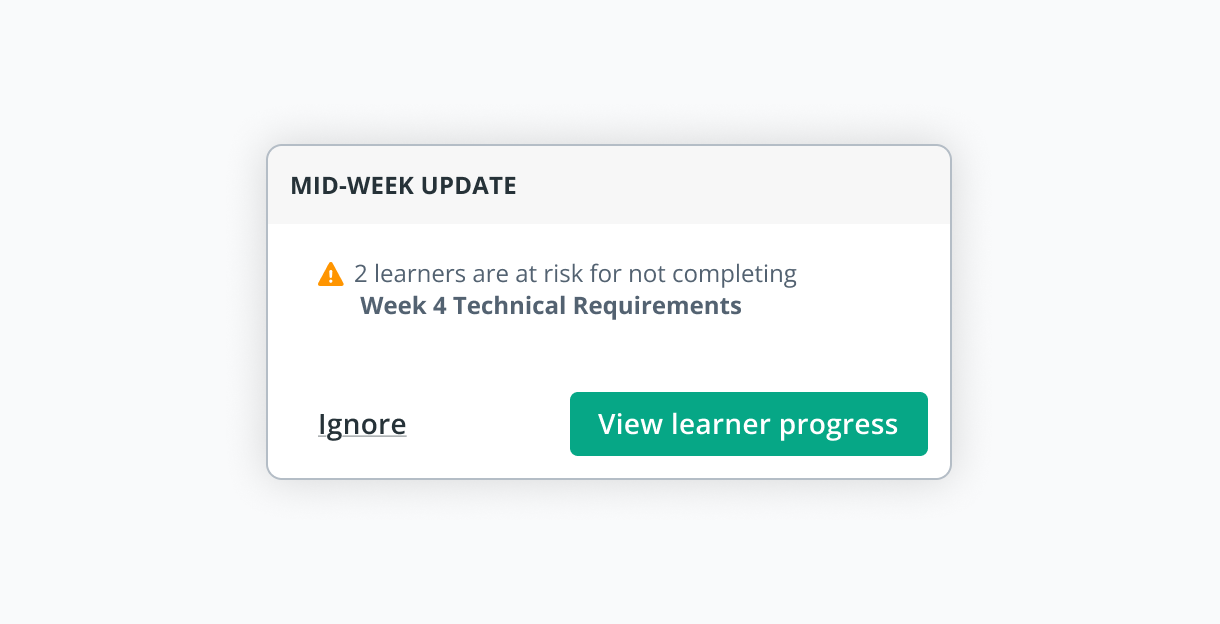
- Mid-week nudges via Zapier
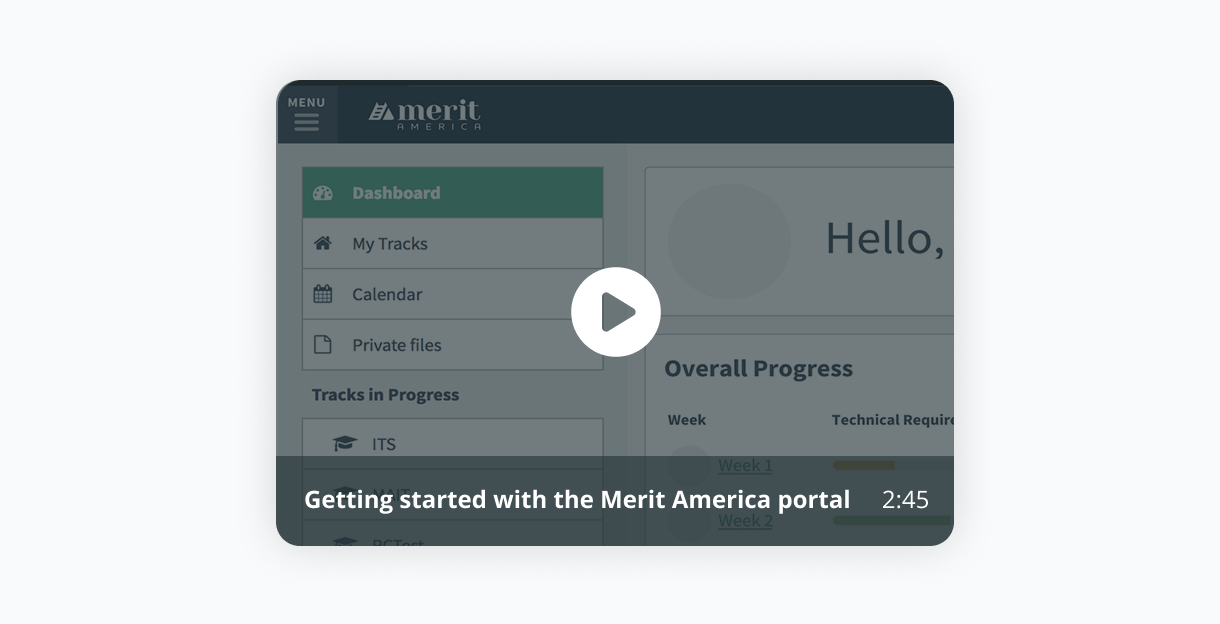
- Screencast onboarding for coaches
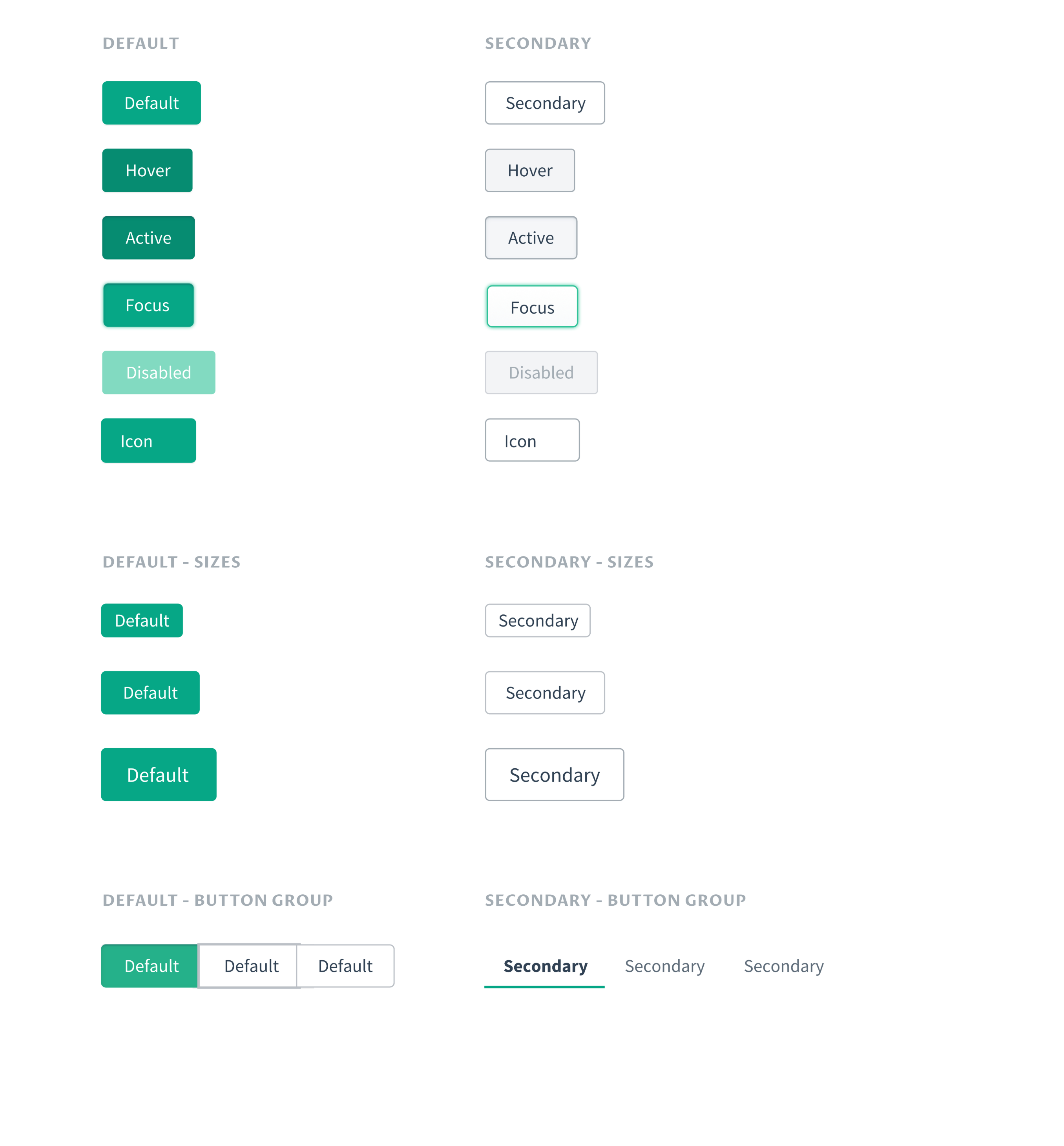
Design System
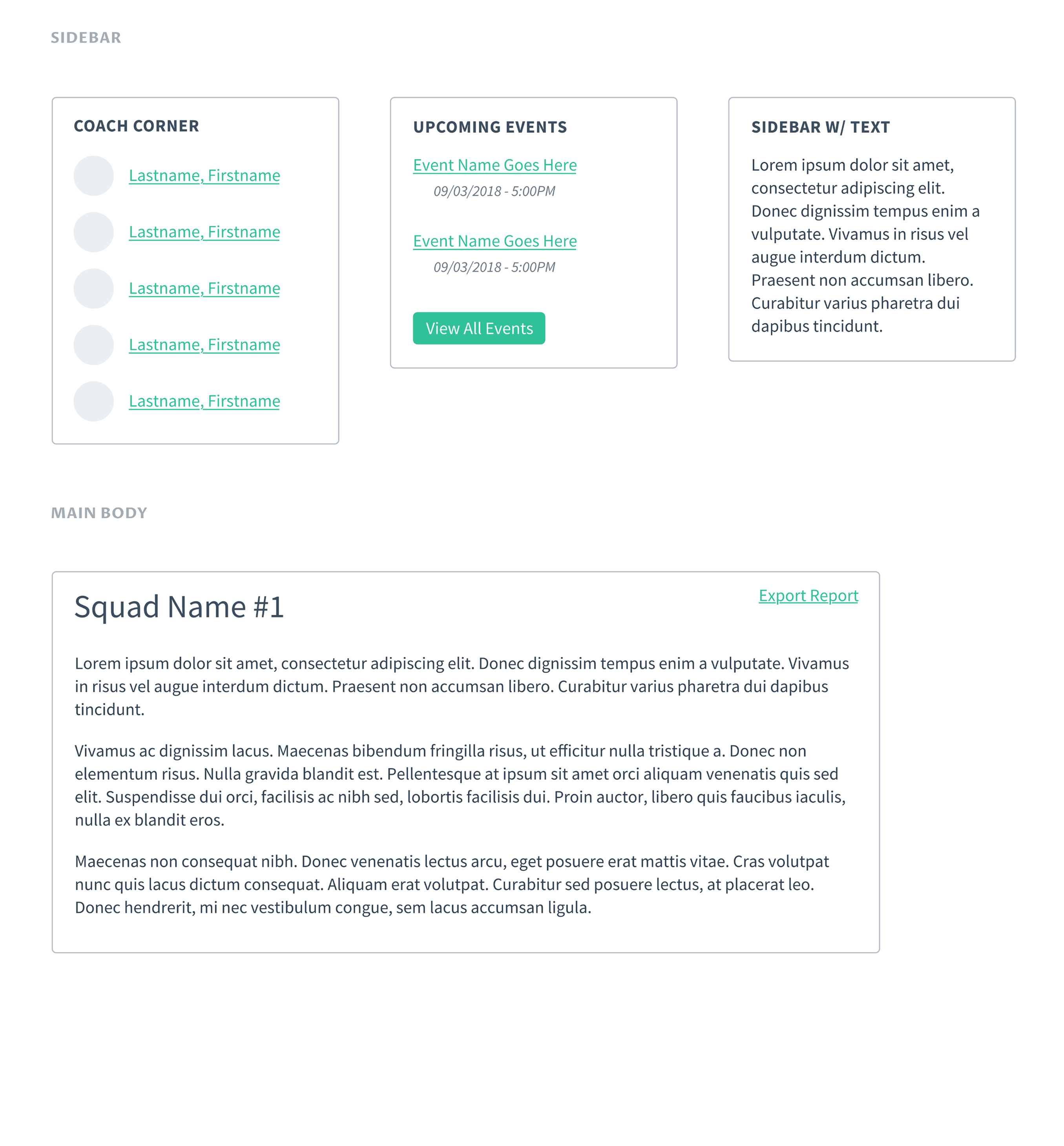
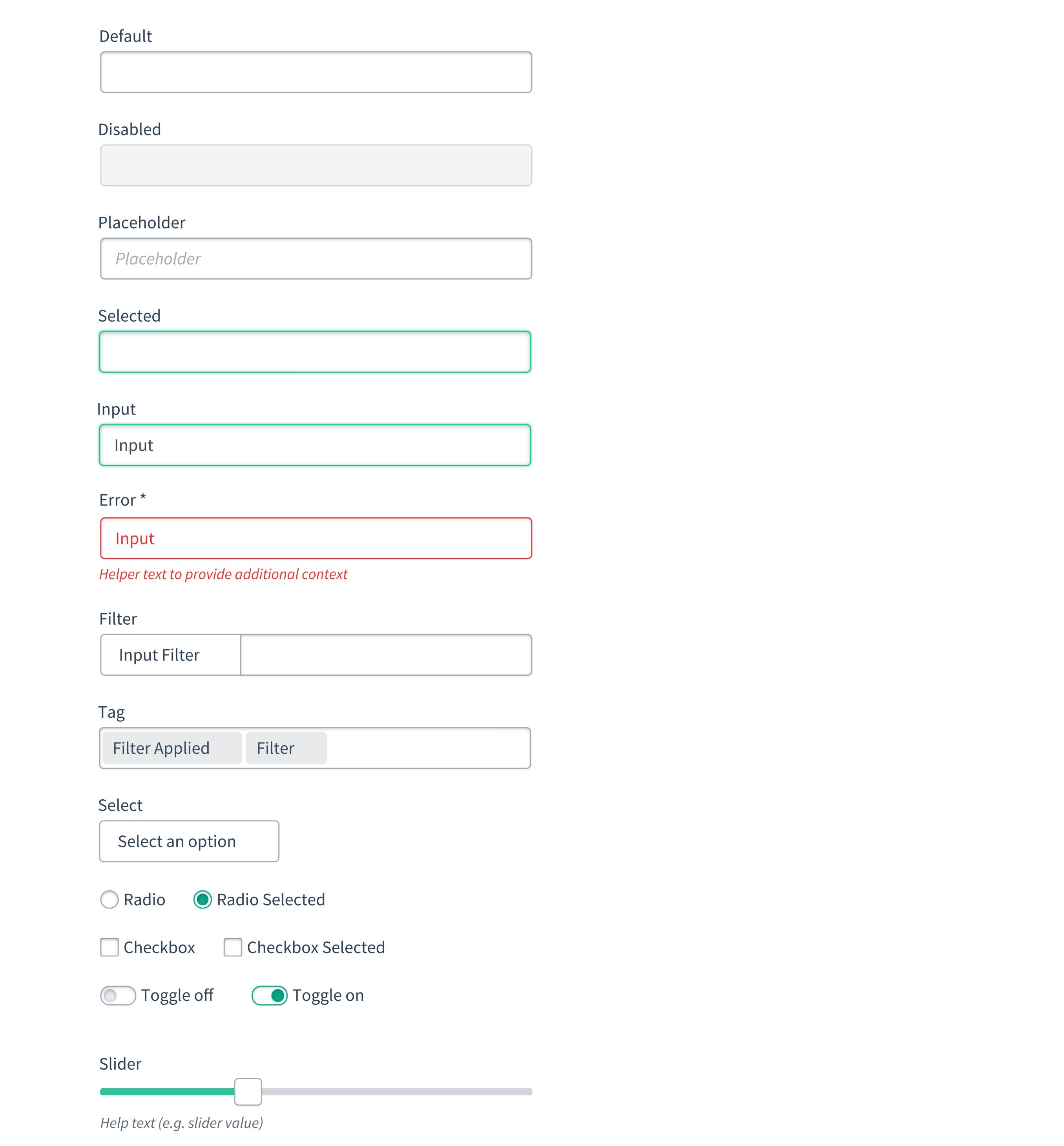
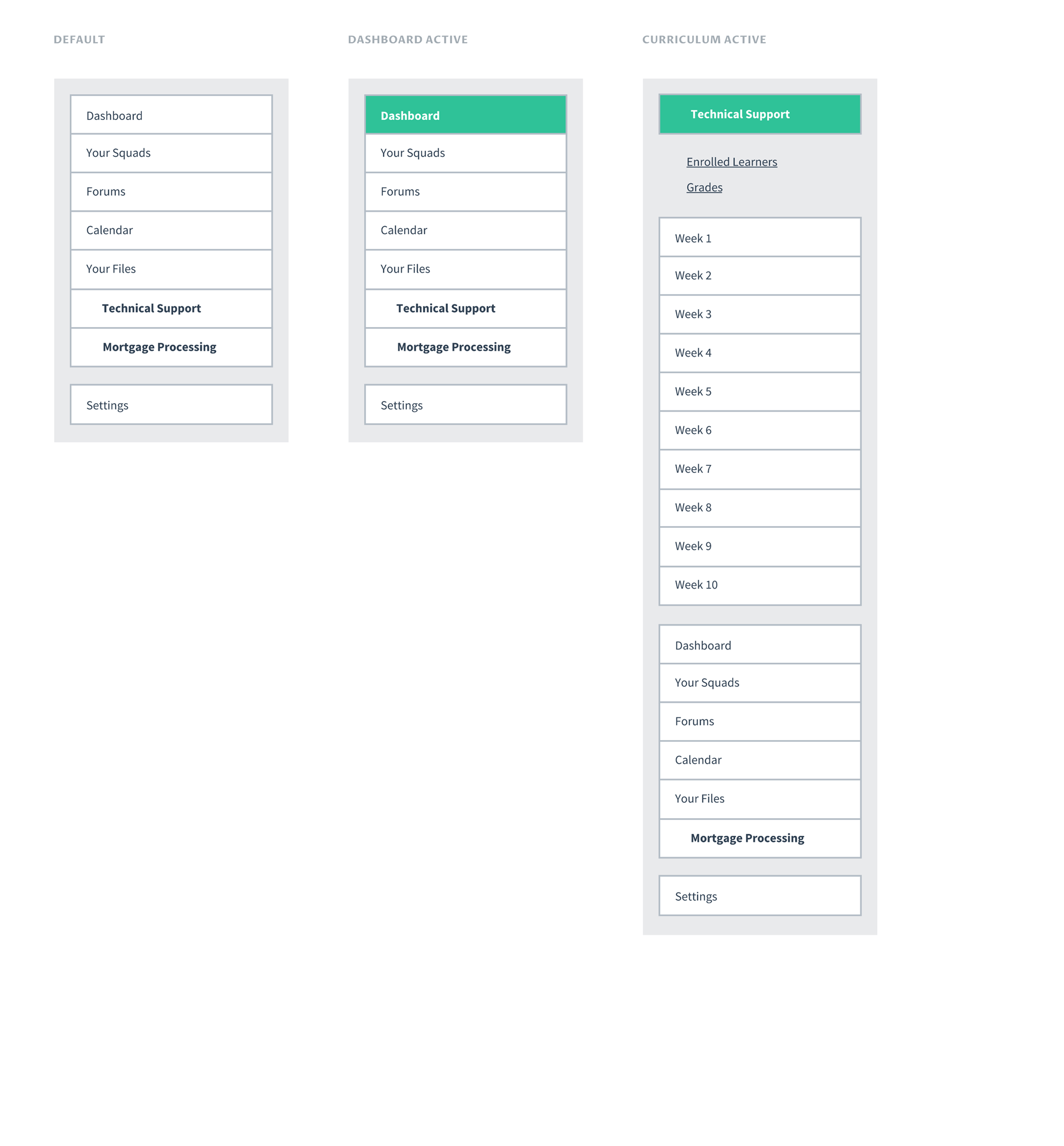
I built a modular UI system using Atomic Design principles with a front-end developer, prioritizing mobile-first layouts, WCAG-compliant contrast, and minimal navigation layers. The goal was consistency under scale.
Key Decisions
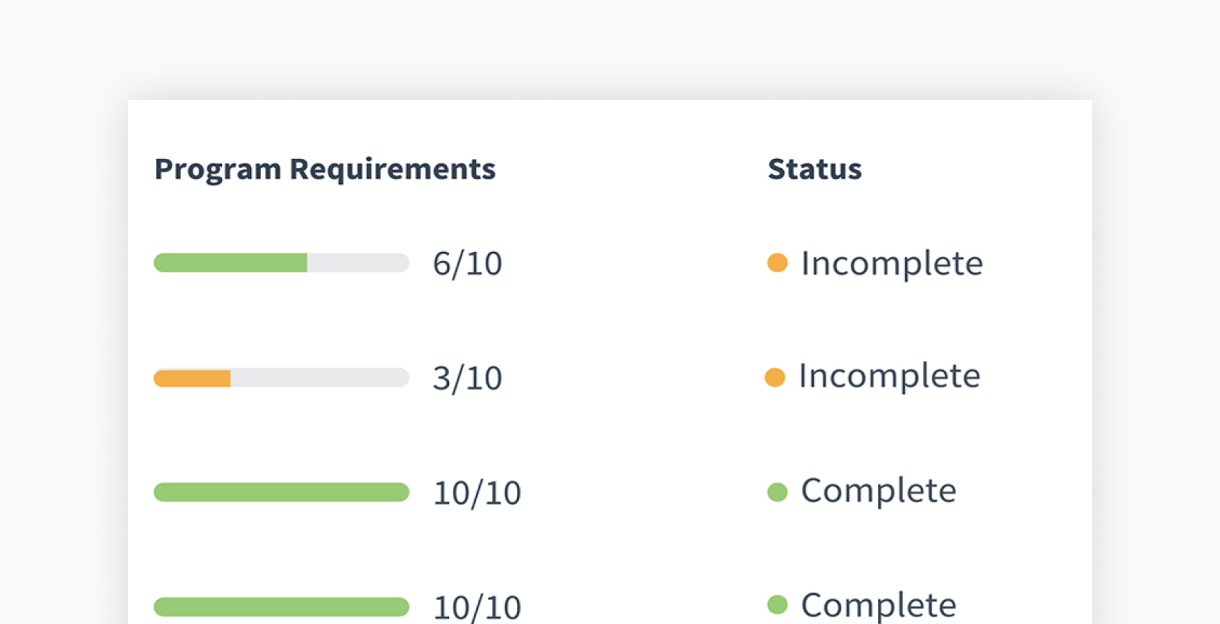
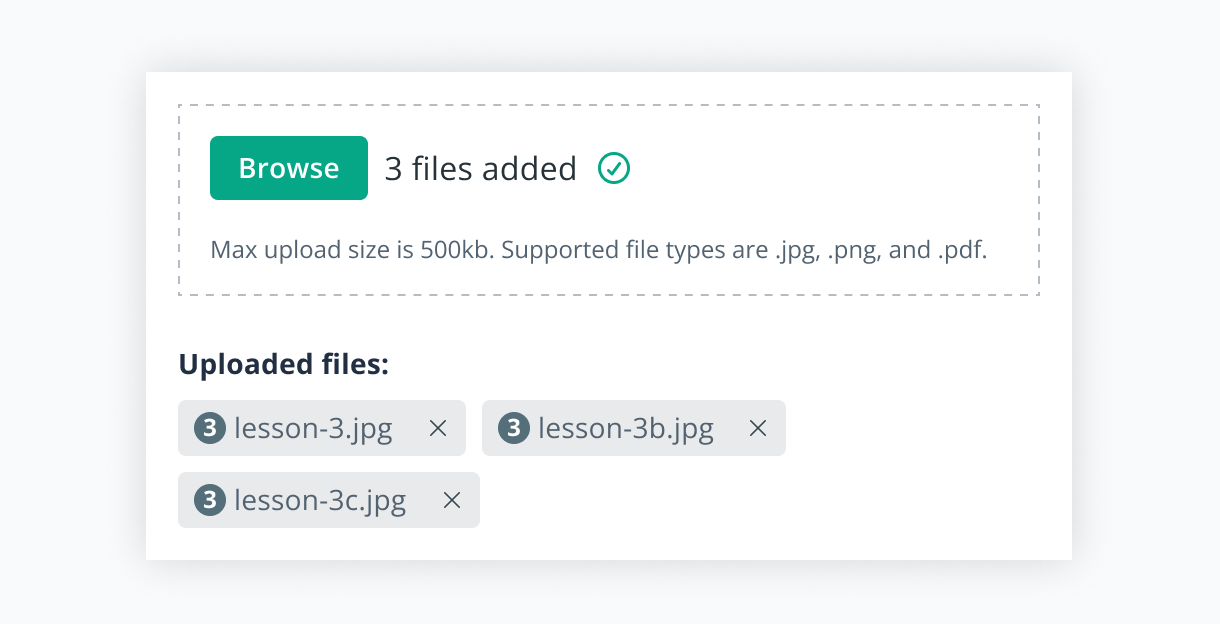
Each tradeoff prioritized learner dignity, coach sustainability, and organizational scale over technical perfection.
When Things Went Sideways
Requirements evolved late, creating scope churn. LMS constraints conflicted with real workflows. Early designs surfaced too much information, increasing confusion rather than reducing it.
The reframe that unlocked everything: stop optimizing for completeness. Ask only "What does a learner need this week?" and "Who needs coach attention now?" and cut everything that doesn't answer one of those two questions.
— Project ReflectionOutcome
The Learner Portal launched with the Alpha cohort and quickly became the operational backbone of Merit America. It streamlined operations, built momentum, ensured transparency, and solidified trust across learners, coaches, and funders.
- 15 → 1,000+ learners across three cities
- 6 → 25+ employees
- $2M → $25M+ in funding
- Added a second track: Java Development
- Coaches spent significantly less time on manual tracking
- Scrappy mitigations shipped on time without rewrites
- Screencast onboarding reduced training load by 1–2 hrs/week
- Portal became the reporting layer for funders
Final UI
Reflection
This project reinforced my belief that constraints can drive creativity. Under strict technical, financial, and time limitations, the discipline of focus, over the luxury of resources, produced the outcome.
- Designing for real environments (mobile, low bandwidth), not ideal conditions
- Using low-cost tools (Zapier, screencasts, screenshots) to deliver high-value outcomes
- Building systems thinking in from day one so it could scale
- Treating accessibility as empathy — not a compliance checkbox
- Establish clearer scope-lock gates earlier to reduce late-stage churn
- Document the design system more formally from the start. Handoff debt accumulated fast as the team grew
- Build in a formal retrospective cadence with the external dev team
The Learner Portal became a launchpad. It gave learners visibility into their own growth, freeing coaches to focus on human connection, and proving that thoughtful design can catalyze systemic change in organizations that most need it.